Repo-Native Artifacts
Project instructions, specs, prototypes, plans, reviews, validation evidence, and commit intent live where agents and engineers can both read them.
 AI Native Dev
AI Native Dev
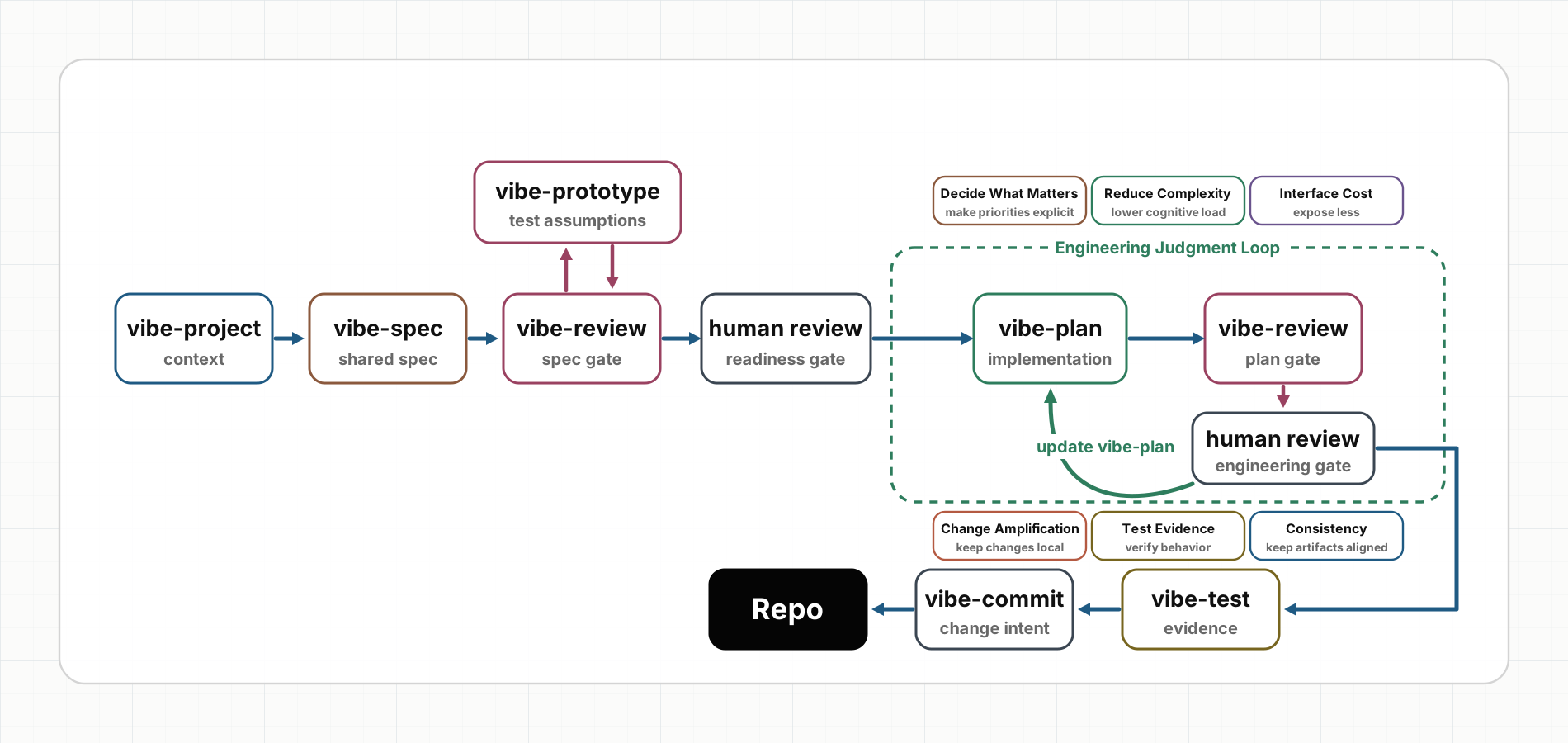
Align context, resolve uncertainty, review the plan, validate behavior, and preserve commit intent in the repository instead of losing it in chat.
Install
The local path gives teams a concrete way to apply the protocol without an account, a hosted backend, or a public GitHub repository requirement.
npx skills add https://skill.ferryman.app --global --yes --agent codex
npx skills add https://skill.ferryman.app --global --yes --agent claude-code
npx skills add https://skill.ferryman.app --list
First step
After installing, open a new Codex thread or reload your agent session, then run this in the target repo.
Use vibe-project to create or update project instructions for this repo. For Codex, update AGENTS.md; for Claude Code, update CLAUDE.md.
AGENTS.md
CLAUDE.md
Product model
Project instructions, specs, prototypes, plans, reviews, validation evidence, and commit intent live where agents and engineers can both read them.
Reusable workflow units define how context is aligned, unknowns are prototyped, specs and plans are reviewed, tests are evidenced, and commits preserve intent.
Future hooks and CI can emit compact, auditable events tied to specs, reviews, plans, tests, commits, outcomes, and human decisions.
Teams can eventually see adoption, spec lead time, review gates, test evidence, and commit quality without reading every chat.
Engineering observability
The current product is a local skill bundle. The longer-term value is that the same artifacts can become trusted workflow events, so teams can see whether work moved from intent, to reviewed spec, to reviewed plan, to tested and reviewable commits.
Source: spec.created to spec.ready or spec.reviewed:ready.
How long does it take for intent to become development-ready?Source: spec files created or updated by vibe-spec.
Are teams using the repo-native spec protocol for feature definition?Source: features with vibe-plan implementation and validation artifacts.
Are teams defining implementation and validation before development?Source: CI coverage reports when available; otherwise test evidence coverage.
Does the implementation have measurable validation evidence?Source: commits prepared with vibe-commit structured evidence.
Are commits preserving intent, change surface, and validation evidence?Protocol execution layer
Each workflow action turns fragile chat context into a repeatable repo-native step: align project instructions, define the feature, prototype unclear points, review specs and plans, capture test evidence, review code, hand off when needed, preserve commit intent, and prepare release notes.
Create project-level agent instructions so coding agents share the same operating rules and repository context.
Turn product intent, issue notes, screenshots, prototypes, and tradeoffs into a repository-native feature spec that follows the project's artifact root.
Review specs, plans, code diffs, docs, or workflow artifacts with a target-specific readiness gate.
Turn a ready spec into vertical implementation slices with validation, architecture checks, and human-review points.
Answer one uncertain product, UI, backend, agent workflow, prompt, or architecture question with disposable evidence.
Inspect coverage, run test cases, capture validation evidence, and recommend test improvements.
Generate store, release, and marketing screenshots from real app UI with composed frames and visual QA.
Create and validate Reveal.js HTML presentations, with browser QA and visually faithful PDF export.
Move active work between agent sessions with concise artifact pointers, validation status, blockers, and next steps.
Preserve intent, changed surface, and validation evidence in commit messages instead of losing them in chat.
Create concise release documents with bilingual release notes, shipped changes, validation, risks, rollback, and links.
Research relevant backlinks, prepare authorized submissions, and verify public links with separate SEO and AI-search evidence.
Local-first
Install once; the workflow lives in your repo, where every coding agent reads the same context.